1. What’s the attitude of most experts to TV?
2.Why does the author say most studies of the impact of television are seriously flawed?
3.What is the meaning of “if anything” in the sixth paragraph?
4. What two different aspects does the Gentzkow and Shapiro prove the impact of TV by?
5. What kind of children can get a more sizable positive impact?
6. Do you agree with the author’s opinion? Why?
7. What kinds of harm does the TV bring to children? ( at least list 6, from you article and your opinion)
Thursday, July 5, 2007

Wednesday, June 27, 2007
Article
According to most experts, TV for kids is basically a no-no. The
Most studies of the impact of television, however, are seriously flawed. They compare kids who watch TV and kids who don't, when kids in those two groups live in very different environments. Kids who watch no TV, or only a small amount of educational programming, as a group are from much wealthier families than those who watch hours and hours. Because of their income advantage, the less-TV kids have all sorts of things going for them that have nothing to do with the impact of television. The problem with comparing them to kids who watch a lot of TV is like the problem with a study that compared, say, kids who ride to school in a Mercedes with kids who ride the bus. The data would no doubt show that Mercedes kids are more likely to score high on their SATs, go to college, and go on to high-paying jobs. None of that has anything to do with the car, but the comparison would make it look as if it did.
The only way to really know the long-term effect of TV on kids would be to run an experiment over time. But no one is going to barrage kids with TV for five years and then see if their test scores go down (though I know plenty of kids who would volunteer).
In a recent study, two economists at the
The key point for Gentzkow and Shapiro's study is that depending on where you lived and when you were born, the total amount of TV you watched in your childhood could differ vastly. A kid born in 1947 who grew up in
What if you're concerned about differences between the populations of the two cities that could affect the results? Then you compare test scores within the same city for kids born at different times.
From the 1966 Coleman Report, the landmark study of educational opportunity commissioned by the Civil Rights Act of 1964, Gentzkow and Shapiro got 1965 test-score data for almost 300,000 kids. They looked for evidence that greater exposure to television lowered test scores. They found none. After controlling for socioeconomic status, there were no significant test-score differences between kids who lived in cities that got TV earlier as opposed to later, or between kids of pre- and post-TV-age cohorts. Nor did the kids differ significantly in the amount of homework they did, dropout rates, or the wages they eventually made. If anything, the data revealed a small positive uptick in test scores for kids who got to watch more television when they were young. For kids living in households in which English was a second language, or with a mother who had less than a high-school education, the study found that TV had a more sizable positive impact on test scores in reading and general knowledge. Evidently, Bozo the Clown was better than we remember.
So, sure, you may cringe when your kid knows every word of the Wiggles' tune "Fruit Salad, Yummy Yummy!" That's understandable. Watching TV has taught them many horrible songs, and for that you will suffer. But maybe you don't need to feel too guilty about it.
Saturday, June 23, 2007
answer
1. What is Eurovision?
European TV station
2. Who won this year's Eurovision contest?
Serbia
3. In paragraph 2, the author mentions something about grumbling. What does he mean? (Use your own words and show me that you understand what the paragraph is about.)
The word people complain the contest
4. Does the author agree with the grumbling?
agree
5. Why did the author use the example of Estonia and Russia?
Because the relationship between Serbia and its neighbors is similar with the example
6. Can a country vote for it's own entrant?
Yes
7. According to the author, why do apparent enemies vote for each other? (par.s 10,11,12)
The same ethnic which are the largest ethnic subgroup in enemy country vote for their home country.
8. Have you ever seen a Eurovision contest? If yes, what did you think of it?
Never seen it
9. Is there a similar contest in your country?
I don’t know.
European TV station
2. Who won this year's Eurovision contest?
Serbia
3. In paragraph 2, the author mentions something about grumbling. What does he mean? (Use your own words and show me that you understand what the paragraph is about.)
The word people complain the contest
4. Does the author agree with the grumbling?
agree
5. Why did the author use the example of Estonia and Russia?
Because the relationship between Serbia and its neighbors is similar with the example
6. Can a country vote for it's own entrant?
Yes
7. According to the author, why do apparent enemies vote for each other? (par.s 10,11,12)
The same ethnic which are the largest ethnic subgroup in enemy country vote for their home country.
8. Have you ever seen a Eurovision contest? If yes, what did you think of it?
Never seen it
9. Is there a similar contest in your country?
I don’t know.
Reconcilable Differences
Reconcilable Differences
by Jonathan Knowles and Richard Ettenson Marketing and Finance have a famously fractious relationship, with each accusing the other of failing to understand how to create value. That tension may seem to be dysfunctional, but when channeled right, it can actually be productive. Marketers see value creation as an externally oriented activity focused on the demand side: satisfying customers’ needs and desires. Marketing’s role, according to this calculus, is to maximize the ratio of the perceived benefits the company offers through its goods and services and the price paid by the customer. In other words, making sure customers feel they’re getting value for their money. By contrast, finance managers see value as something that’s derived primarily from the supply side. To them, value creation is an internally oriented activity focused on minimizing the production and delivery costs needed to support a given level of revenue and requires the return on investment to be demonstrated for all costs. Who’s right? They both are, of course. Superior business performance requires striking a healthy balance between customer value and cost structure. The goal is neither to maximize customer benefit – which would entail giving away your product – nor to minimize costs in isolation but rather to optimize the relationship between the two. Marketing and Finance both have important insights to offer, so the goal is to manage the tension between them, not to eliminate it. Finance needs to take a cue from Marketing (and behavioral economics) and accept that people make choices based on utility, not just financial considerations. Peter Drucker articulated this decades ago when he said “What the customer buys and considers value is never a product. It is always a utility, that is, what a product or service does for him.” Hard as it may be for many finance managers to appreciate, intangibles such as relevance, status, belonging, and gratification can be powerful and predictable drivers of customer decisions. Finance managers must develop models that explicitly connect marketing-related intangibles – the non monetary dimensions that customers will pay for – to profitable changes in customer behavior. By asking Marketing to put the expected impact of its investments in intangibles into concrete terms (for example, by estimating the anticipated number of new customers that would be acquired during a certain time frame), Finance can analyze and discuss marketing expenditures in relation to specific performance criteria while acknowledging that quantifying customer behavior is an inexact science. This is not a concession on the part of the financial manager; it’s a smart and effective way to deal with investments that have potentially large but uncertain payoffs. Financial analysis is there to assist managers in making informed judgments when things are uncertain. In a similar vein, despite their focus on customer value, marketing managers must develop an appreciation for Finance’s interest: shareholder value. Marketers rarely incorporate the perspective and language of Finance when communicating the value their activities deliver to the organization. They often fail to recognize that the measures of value they find important – things like customer awareness, preference, brand equity, and loyalty – don’t translate easily for finance types. Marketers may not be able to put a definitive dollar figure on brand equity (though some are trying), but they can consciously frame the impact of their activities in terms of the objectives they share with finance: delivering organic growth, increasing cash flow and profits, and reducing earnings risk. Brands that sustain a price premium boost profitability. Brands that customers trust are more easily extended, aiding growth. Loyal customers reduce earnings volatility, because they don’t churn. When Marketing expresses its goals in those terms, it sublimates the tension between the two disciplines into a valuable debate about Marketing’s impact on profit, growth, and risk. Marketers shouldn’t act like finance professionals, and vice versa. But they should be on speaking terms and know how to communicate and collaborate effectively with each other. If these two groups can’t speak each other’s language, neither will be able to maximize its value to customers, shareholders, or the organization.
by Jonathan Knowles and Richard Ettenson Marketing and Finance have a famously fractious relationship, with each accusing the other of failing to understand how to create value. That tension may seem to be dysfunctional, but when channeled right, it can actually be productive. Marketers see value creation as an externally oriented activity focused on the demand side: satisfying customers’ needs and desires. Marketing’s role, according to this calculus, is to maximize the ratio of the perceived benefits the company offers through its goods and services and the price paid by the customer. In other words, making sure customers feel they’re getting value for their money. By contrast, finance managers see value as something that’s derived primarily from the supply side. To them, value creation is an internally oriented activity focused on minimizing the production and delivery costs needed to support a given level of revenue and requires the return on investment to be demonstrated for all costs. Who’s right? They both are, of course. Superior business performance requires striking a healthy balance between customer value and cost structure. The goal is neither to maximize customer benefit – which would entail giving away your product – nor to minimize costs in isolation but rather to optimize the relationship between the two. Marketing and Finance both have important insights to offer, so the goal is to manage the tension between them, not to eliminate it. Finance needs to take a cue from Marketing (and behavioral economics) and accept that people make choices based on utility, not just financial considerations. Peter Drucker articulated this decades ago when he said “What the customer buys and considers value is never a product. It is always a utility, that is, what a product or service does for him.” Hard as it may be for many finance managers to appreciate, intangibles such as relevance, status, belonging, and gratification can be powerful and predictable drivers of customer decisions. Finance managers must develop models that explicitly connect marketing-related intangibles – the non monetary dimensions that customers will pay for – to profitable changes in customer behavior. By asking Marketing to put the expected impact of its investments in intangibles into concrete terms (for example, by estimating the anticipated number of new customers that would be acquired during a certain time frame), Finance can analyze and discuss marketing expenditures in relation to specific performance criteria while acknowledging that quantifying customer behavior is an inexact science. This is not a concession on the part of the financial manager; it’s a smart and effective way to deal with investments that have potentially large but uncertain payoffs. Financial analysis is there to assist managers in making informed judgments when things are uncertain. In a similar vein, despite their focus on customer value, marketing managers must develop an appreciation for Finance’s interest: shareholder value. Marketers rarely incorporate the perspective and language of Finance when communicating the value their activities deliver to the organization. They often fail to recognize that the measures of value they find important – things like customer awareness, preference, brand equity, and loyalty – don’t translate easily for finance types. Marketers may not be able to put a definitive dollar figure on brand equity (though some are trying), but they can consciously frame the impact of their activities in terms of the objectives they share with finance: delivering organic growth, increasing cash flow and profits, and reducing earnings risk. Brands that sustain a price premium boost profitability. Brands that customers trust are more easily extended, aiding growth. Loyal customers reduce earnings volatility, because they don’t churn. When Marketing expresses its goals in those terms, it sublimates the tension between the two disciplines into a valuable debate about Marketing’s impact on profit, growth, and risk. Marketers shouldn’t act like finance professionals, and vice versa. But they should be on speaking terms and know how to communicate and collaborate effectively with each other. If these two groups can’t speak each other’s language, neither will be able to maximize its value to customers, shareholders, or the organization.
Sunday, June 10, 2007
Statues of Easter Island (10th - 16th Century) Easter Island, Chile
When I was young I saw the Statues of Easter Island first on TV. How mysterious and miraculous they are! I was attracted by their huge volume and strange faces. Perhaps, they are erected by God or by intelligent extraterrestrial life. They are facing to sea and expecting something happened. Nowadays, nobody knows why this statues are established what they stand for. According to a legend, the islanders who erected the statues may have believed that those would capture the chiefs' "mana" (supernatural powers). They may have believed that by concentrating mana on the island good things would result, e.g., rain would fall and crops would grow.
The Great Wall of China (220 B.C and 1368 - 1644 A.D.) China
I voted the Great Wall of China, because not only am I a Chinese, but also it is the largest man-made monument ever to have been built and it is disputed that it is the only one visible from space. As the old Chinese proverb goes, you're not a real man if you haven't climbed the Great Wall. I have been to the Great Wall twice. It was very long with uncountable steps, and constructed on the ridge of mountain. It was almost incredible for everyone to cover the whole Great Wall. It was also a miracle in architectural history. Architects and archeologist did not know how people established the Great wall over 2000 years ago without any big electrically powered machine. The Great Wall was build for military defense, so a lot of heroes’ stories and legends are about it. It can prove perseverance and persistence of Chinese.
The Acropolis of Athens (450 - 330 B.C.) Athens, Greece
I choose the Acropolis of Athens, because it reminds me the democracy in Greek 2000 years ago. I have never been to Greek, but I knew the Acropolis of Athens was the most famous architectural landmarks of ancient and modern history in my text book as in middle high school. I admire the ancient Greek, because it was also the origin of civilization and democracy.
The Roman Colosseum (70 - 82 A.D.) Rome, Italy
I choose the Roman Colosseum because the roman gladiators and its design concept. I saw it in many movies. The brave slave gladiators fought with wild animals, yet they are only the joy of the noblemen. They set an example to human being due to their courage and persistence. Furthermore, it is not a design concept that can imprint irresistibly in every modern sports stadium any more except the Roman Colosseum.
The Taj Mahal (1630 A.D.) Agra, India
I choose the Taj Mahal in that it is the most romantic and wonderful architecture which I have ever seen.It is generally considered the finest example of Mughal architecture, a style that combines elements of Persian, Turkish, Indian, and Islamic architectural styles. However, I was attracted by not only its design but also the love story. Although the Emperor had a lot of wives, he was only enamored by his second wife and established the Taj Mahal to honor the memory of his beloved wife.
Petra (9 B.C. - 40 A.D.), Jordan
After a careful consideration, I decide to vote for Petra. The most important reason is that it is a great symbol of engineering and protection. As we know, Petra was the glittering capital of the Nabataean empire of King Aretas IV (9 B.C. to 40 A.D.). Because Petra was located at the edge of the Arabian Desert, it was necessary for Nabataeans to create and develop advanced water technology it was necessary for Nabataeans to create and develop advanced water technology for the survival and prosperity of their city. As a result, Nabataeans became masters of water technology and provided their city with great tunnel constructions and water chambers. Water is very vital to human society and it becomes increasingly important today because of the increasingly large population in the world Therefore, today everyone should have an awareness of protecting and utilizing water in a proper way, which is made possible by advanced water technology. So many people may be aware of the importance of water resources and related technologies if Petra, an ancient city full of water technology and human intelligence, is selected as a new wonder. That is why I vote for Petra.
The Pyramid at Chichén Itzá (before 800 A.D.) Yucatan Peninsula, Mexico
I choose the Pyramid at Chichen Itza which was a symbol of Maya civilization. Although the Maya civilization have disappeared, no one can deny it had ever been brilliant and beyond any civilizations. According to some researches, Maya Legislation can be maintained until after 4 billion years, and they had their own character, they had wonderful sculpture, painting and bronze. What a amazing culture they had! Why the culture fade away confused scholars today! I voted it because it symbolized the brightness and hardworking of ancient people.
When I was young I saw the Statues of Easter Island first on TV. How mysterious and miraculous they are! I was attracted by their huge volume and strange faces. Perhaps, they are erected by God or by intelligent extraterrestrial life. They are facing to sea and expecting something happened. Nowadays, nobody knows why this statues are established what they stand for. According to a legend, the islanders who erected the statues may have believed that those would capture the chiefs' "mana" (supernatural powers). They may have believed that by concentrating mana on the island good things would result, e.g., rain would fall and crops would grow.

The Great Wall of China (220 B.C and 1368 - 1644 A.D.) China
I voted the Great Wall of China, because not only am I a Chinese, but also it is the largest man-made monument ever to have been built and it is disputed that it is the only one visible from space. As the old Chinese proverb goes, you're not a real man if you haven't climbed the Great Wall. I have been to the Great Wall twice. It was very long with uncountable steps, and constructed on the ridge of mountain. It was almost incredible for everyone to cover the whole Great Wall. It was also a miracle in architectural history. Architects and archeologist did not know how people established the Great wall over 2000 years ago without any big electrically powered machine. The Great Wall was build for military defense, so a lot of heroes’ stories and legends are about it. It can prove perseverance and persistence of Chinese.
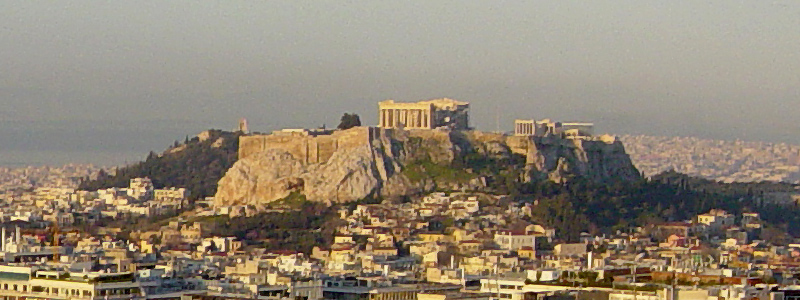
The Acropolis of Athens (450 - 330 B.C.) Athens, Greece
I choose the Acropolis of Athens, because it reminds me the democracy in Greek 2000 years ago. I have never been to Greek, but I knew the Acropolis of Athens was the most famous architectural landmarks of ancient and modern history in my text book as in middle high school. I admire the ancient Greek, because it was also the origin of civilization and democracy.
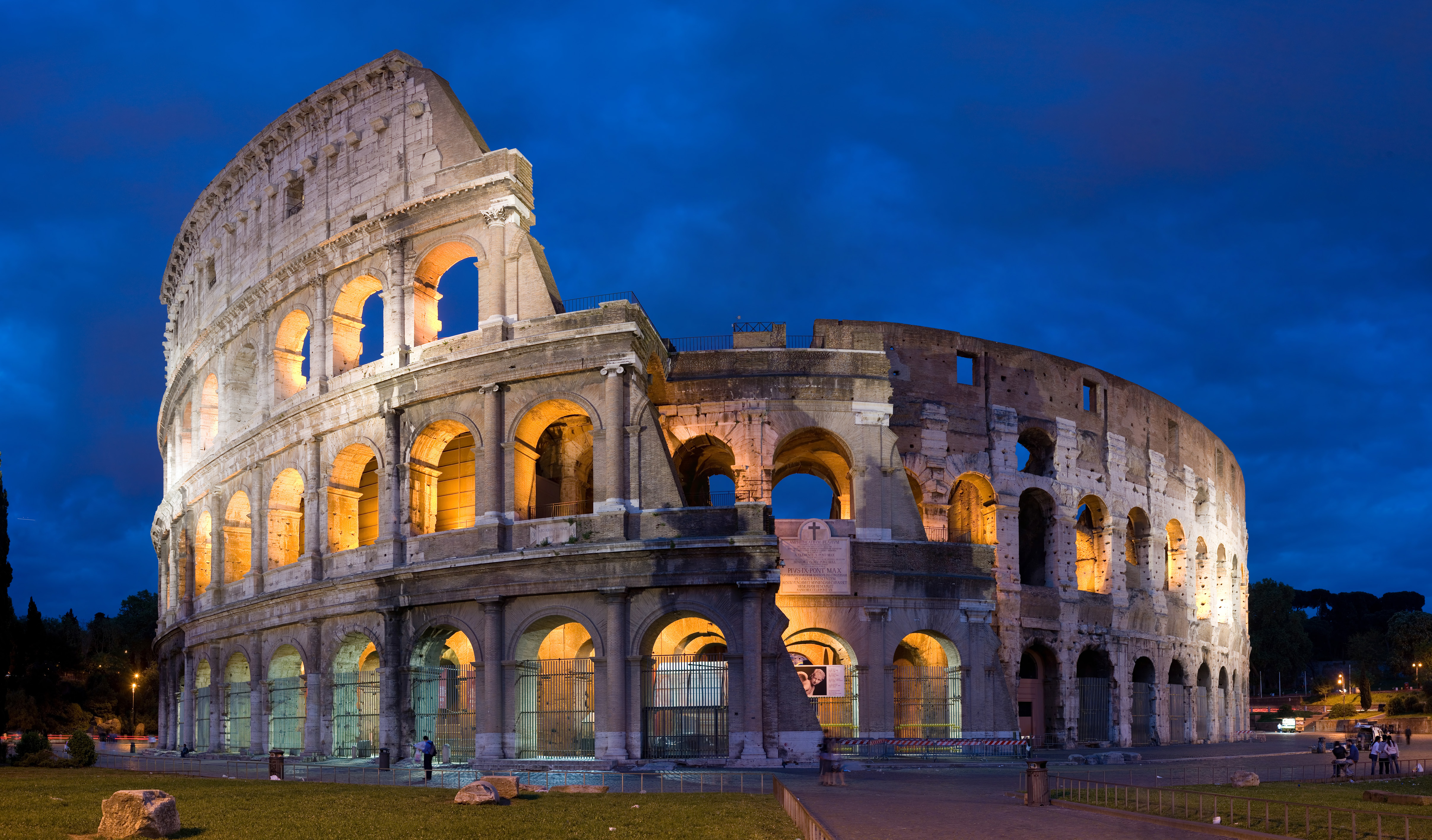
The Roman Colosseum (70 - 82 A.D.) Rome, Italy
I choose the Roman Colosseum because the roman gladiators and its design concept. I saw it in many movies. The brave slave gladiators fought with wild animals, yet they are only the joy of the noblemen. They set an example to human being due to their courage and persistence. Furthermore, it is not a design concept that can imprint irresistibly in every modern sports stadium any more except the Roman Colosseum.
The Taj Mahal (1630 A.D.) Agra, India
I choose the Taj Mahal in that it is the most romantic and wonderful architecture which I have ever seen.It is generally considered the finest example of Mughal architecture, a style that combines elements of Persian, Turkish, Indian, and Islamic architectural styles. However, I was attracted by not only its design but also the love story. Although the Emperor had a lot of wives, he was only enamored by his second wife and established the Taj Mahal to honor the memory of his beloved wife.

Petra (9 B.C. - 40 A.D.), Jordan
After a careful consideration, I decide to vote for Petra. The most important reason is that it is a great symbol of engineering and protection. As we know, Petra was the glittering capital of the Nabataean empire of King Aretas IV (9 B.C. to 40 A.D.). Because Petra was located at the edge of the Arabian Desert, it was necessary for Nabataeans to create and develop advanced water technology it was necessary for Nabataeans to create and develop advanced water technology for the survival and prosperity of their city. As a result, Nabataeans became masters of water technology and provided their city with great tunnel constructions and water chambers. Water is very vital to human society and it becomes increasingly important today because of the increasingly large population in the world Therefore, today everyone should have an awareness of protecting and utilizing water in a proper way, which is made possible by advanced water technology. So many people may be aware of the importance of water resources and related technologies if Petra, an ancient city full of water technology and human intelligence, is selected as a new wonder. That is why I vote for Petra.
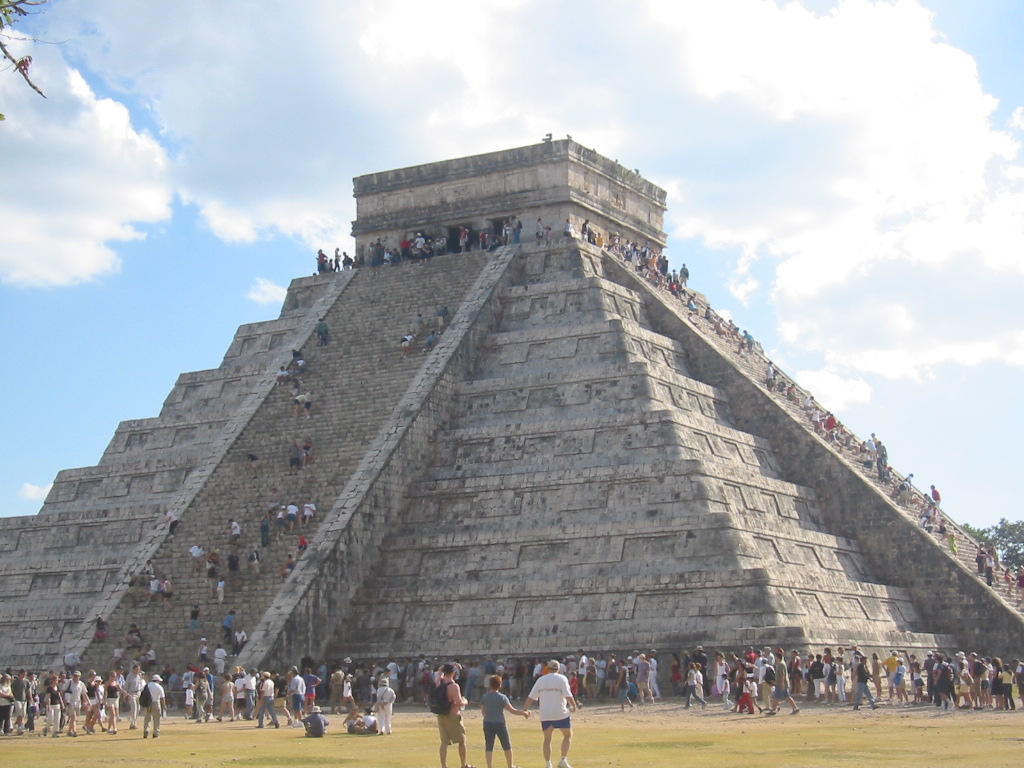
The Pyramid at Chichén Itzá (before 800 A.D.) Yucatan Peninsula, Mexico
I choose the Pyramid at Chichen Itza which was a symbol of Maya civilization. Although the Maya civilization have disappeared, no one can deny it had ever been brilliant and beyond any civilizations. According to some researches, Maya Legislation can be maintained until after 4 billion years, and they had their own character, they had wonderful sculpture, painting and bronze. What a amazing culture they had! Why the culture fade away confused scholars today! I voted it because it symbolized the brightness and hardworking of ancient people.

Tuesday, June 5, 2007
Buffalo Wings
Buffalo Wings
Have you ever heard the Buffalo wings or chicken wings before? It is really the most popular food in Buffalo. Buffalo wings are chicken wing sections (called flats and drums), deep fried, and coated in sauce. Buffalo wings are named after the city of Buffalo, New York where they originated, and the appellation "buffalo" is now commonly applied to foodstuffs other than wings that are seasoned with the sauce or close variations on it.
Last weekend, my friend take me to the Buffalo Wild Wings, taste the delicious wings, and heard a interesting story about the origination of Buffalo wings. My friend told me Buffalo wings were first prepared at the Anchor Bar on Main Street, near the corner of North Street, Buffalo, on October 3, 1964. Teressa Bellissimo, co-owner of the Anchor Bar with her husband Frank, had the idea of deep frying chicken wings and tossing them in Frank's RedHot sauce for her son Dominic and his friends. One evening, on a spur of the moment, Teressa presented her son with a deep-fried and sauced creation, and they were an instant hit. At the time the recipe was created, chicken wings were typically thrown away or reserved for making stock.
After heard this story, do you really want to go to the Anchor Bar? My answer is yse. But Anchor Bar is located in downtown; it is far from South campus and North campus. I just ate wings in Buffalo Wild Wings(3035 Niagara Falls Boulevard, Amherst)which is the nearest one to North campus. This restaurant’s full name is Buffalo Wild Wings Grill & Bar. It is a sports bar and restaurant franchise in the United States that is best-known for its buffalo wings. There are multiple large screen televisions viewable from all seats and a bar. People can watch sports game, drink and have a party in Buffalo Wild Wings.
The food in Buffalo Wild Wings is very attractive. There are 14 signature sauces for wings in order from mildest to hottest, but the original Buffalo sauce is composed of only six ingredients: cayenne pepper sauce, white vinegar, butter, salt, and garlic. The hottest sauce is Blazin which is very pungent. If you like spicy, you can challenge it. Besides wings, the restaurants also feature a full menu of salads, appetizers, burgers, and specialty drinks.
There may be another delicious food waiting for you discovering them. Enjoy your life at Buffalo, you will find a lot of interests here!
Have you ever heard the Buffalo wings or chicken wings before? It is really the most popular food in Buffalo. Buffalo wings are chicken wing sections (called flats and drums), deep fried, and coated in sauce. Buffalo wings are named after the city of Buffalo, New York where they originated, and the appellation "buffalo" is now commonly applied to foodstuffs other than wings that are seasoned with the sauce or close variations on it.
Last weekend, my friend take me to the Buffalo Wild Wings, taste the delicious wings, and heard a interesting story about the origination of Buffalo wings. My friend told me Buffalo wings were first prepared at the Anchor Bar on Main Street, near the corner of North Street, Buffalo, on October 3, 1964. Teressa Bellissimo, co-owner of the Anchor Bar with her husband Frank, had the idea of deep frying chicken wings and tossing them in Frank's RedHot sauce for her son Dominic and his friends. One evening, on a spur of the moment, Teressa presented her son with a deep-fried and sauced creation, and they were an instant hit. At the time the recipe was created, chicken wings were typically thrown away or reserved for making stock.
After heard this story, do you really want to go to the Anchor Bar? My answer is yse. But Anchor Bar is located in downtown; it is far from South campus and North campus. I just ate wings in Buffalo Wild Wings(3035 Niagara Falls Boulevard, Amherst)which is the nearest one to North campus. This restaurant’s full name is Buffalo Wild Wings Grill & Bar. It is a sports bar and restaurant franchise in the United States that is best-known for its buffalo wings. There are multiple large screen televisions viewable from all seats and a bar. People can watch sports game, drink and have a party in Buffalo Wild Wings.
The food in Buffalo Wild Wings is very attractive. There are 14 signature sauces for wings in order from mildest to hottest, but the original Buffalo sauce is composed of only six ingredients: cayenne pepper sauce, white vinegar, butter, salt, and garlic. The hottest sauce is Blazin which is very pungent. If you like spicy, you can challenge it. Besides wings, the restaurants also feature a full menu of salads, appetizers, burgers, and specialty drinks.
There may be another delicious food waiting for you discovering them. Enjoy your life at Buffalo, you will find a lot of interests here!
Monday, June 4, 2007
Subscribe to:
Comments (Atom)